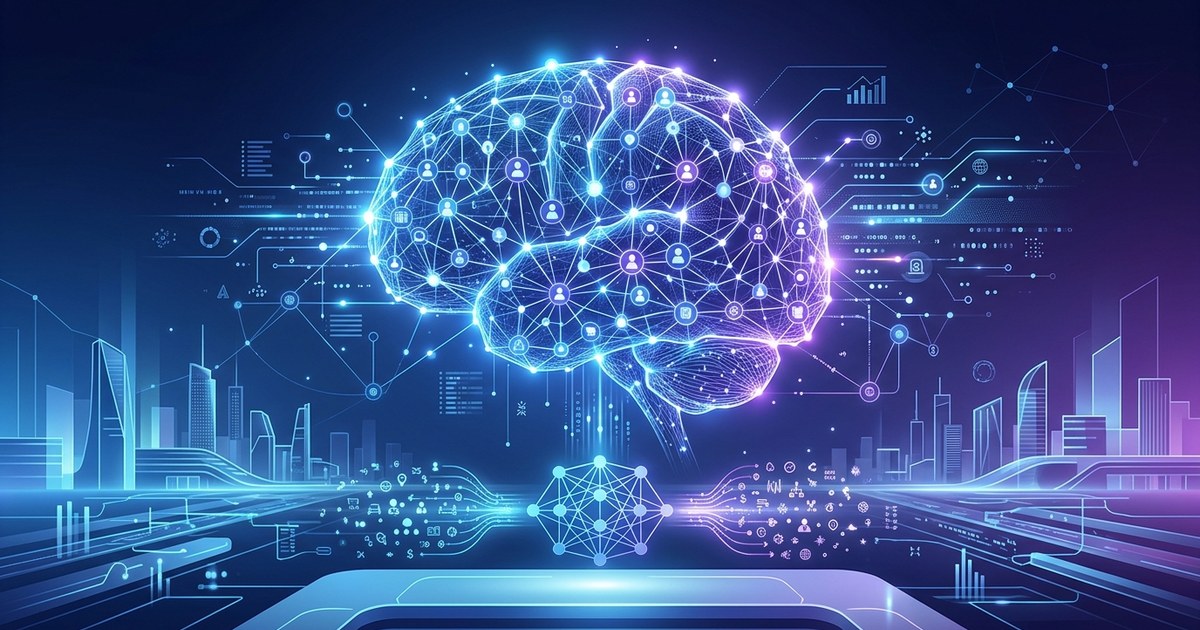
Behind every AI answer sits an enormous amount of structured knowledge. Google calls this the Knowledge Graph. It is not a list, but a network of millions of facts and connections. People, businesses, places, products and concepts are linked to one another. This network is the basis for how AI understands you — or does not.
What exactly is the knowledge graph?
The knowledge graph is a database of entities and their mutual relationships. Google knows, for example, that The Hague is a city in the Netherlands, that The Hague is the seat of government, and that certain businesses are based in The Hague. The same logic applies to your business: if Google knows the connections between your name, location, sector and specialism, you can become part of that graph.
How do you get into the knowledge graph?
There is no button to press. You build presence through consistent information across multiple trustworthy platforms, a fully completed Google Business Profile, an entry on Wikipedia or Wikidata for larger organisations, and structured data on your own website that makes the connections explicit. Every trustworthy mention is a brick in the foundation.
Why is this relevant for AI?
ChatGPT, Gemini and other AI systems are trained in part on the same sources that feed the knowledge graph. If you are recognisable in that network, you increase the chance that AI systems know you and cite you. The knowledge graph is, in a sense, the memory of the internet.
Practical example
An architecture firm in Amsterdam has a fully completed Google Business Profile, is listed on industry association websites and has JSON-LD on its website naming its name, location and specialism. When someone asks Gemini about specialised architects in Amsterdam, this firm has a demonstrably higher chance of being mentioned than a competitor that only has a website with no further presence.