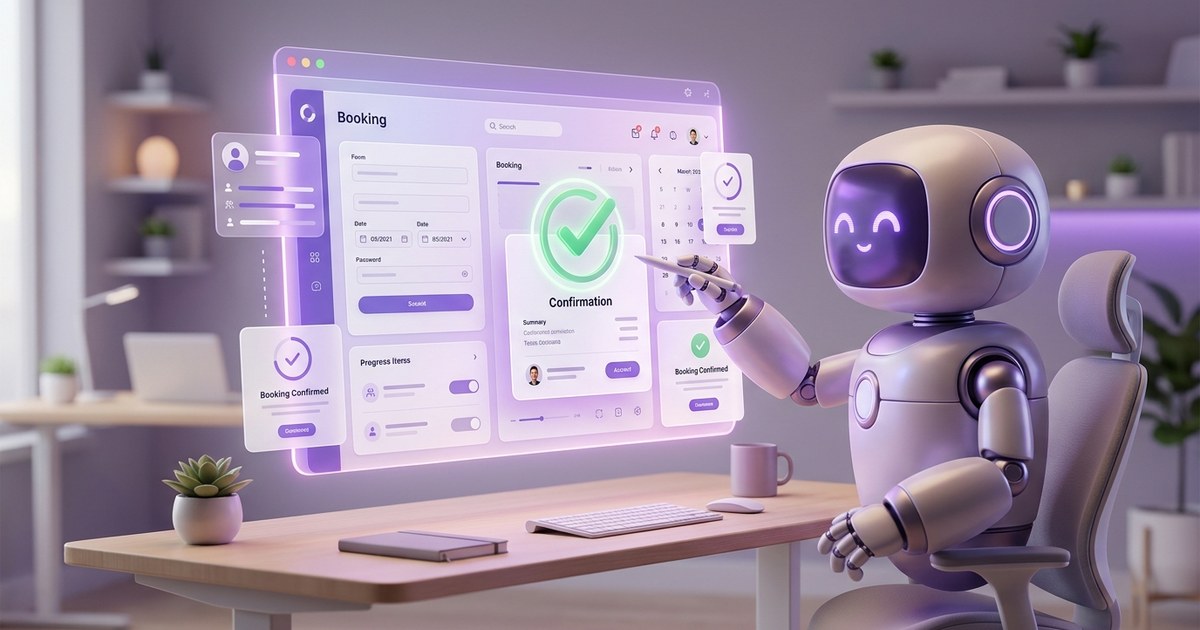
A major shift in how AI deals with websites is taking place in late June 2026. Where AI assistants have so far mostly read your site in order to cite from it, they are now starting to use it as well. With the roll-out of automatic browsing (auto-browse) to more devices, an AI agent can navigate to your website on its own to book, compare, reserve or request something — on behalf of the user.
This turns findability from a citation problem into a transaction problem. The question is no longer only “am I mentioned in the answer?”, but also: “can an AI agent actually get the job done on my site?”
Why this matters to you
For a small or medium-sized business owner, this is a new bar. An agent that gets stuck on an unclear form, a slow page or illogical navigation gives up — and picks a competitor where it does succeed. Being found well will soon not be enough; your site also has to be completable for a machine acting on behalf of your customer.
What does this mean in practice?
- Make your most important actions crystal clear. Getting in touch, requesting a quote or making an appointment must be possible in a few logical steps — for humans and agents alike.
- Make sure forms and buttons genuinely work and are clearly labelled. An agent cannot “just take a guess”.
- Use structured data. Schema markup helps AI understand what you offer and how an action unfolds.
- Keep your core information up to date and unambiguous — prices, opening hours, services. Conflicting information leaves an agent stranded.
Those who invest now in a clear, working and well-structured site will soon be not only more findable in AI, but also more usable — and that will be the real difference.
Source: BotRank – AI visibility becomes transactional in late June 2026